Businesses skip developing an app from scratch to make an early market entry, implement customization strategies faster, and scale their services to new regions. When entrepreneurs saw the success of popular firms such as Uber, Gojek, and Grab, they got inspiration from their technologies and decided to replicate them. That’s how businesses across diverse industries shifted towards clone app development.
Entrepreneurs couldn’t resist a pre-tested model that carries lower risks while offering greater user familiarity. Ready-made models bring your vision for a mobility service, food delivery, handyman service, or any other on-demand service to life. This helpful piece explores clone app development, highlighting its key benefits and challenges while outlining the essential factors to consider when choosing the right provider to build such apps.
What Is a Clone App? How Does It Differ From a Custom App?
A clone app is a pre-built digital platform that takes reference from popular apps in its user experience, app architecture, and functionalities. The goal is to replicate the app’s functionality without infringing on proprietary code or intellectual property. The massive user base of the profitable apps inspires entrepreneurs to create a similar model that can expand their market presence and remove the guesswork in optimizing workflows. They can rebrand the digital product with their brand, design, features, pricing systems, and business-centric customizations.
Startups, small and medium enterprises, and venture capitalists are increasingly investing in clone app development in recent years. Lower financial risk and limited time to market are major reasons for the decision. Clone apps may not be the style of every entrepreneur. A clear comparison of clone and custom apps can help you determine which approach best fits your long-term plans:
1. Clone apps are based on proven, ready-made templates. So, it consumes lower initial investment. On the other hand, custom apps require a huge upfront investment for development from the ground up.
2. When it comes to customization, custom apps offer greater flexibility and extensive customization options. While clone apps can also be customized, they may have certain limitations when it comes to advanced features, functionality, and scalability.
3. Building user familiarity is often quicker with clone apps like Uber clone app because users are already accustomed to similar interfaces and functionalities. Custom apps, on the other hand, may require additional marketing and user education to establish the same level of familiarity.
4. Lower development time for clone apps gives businesses an early entry. That advantage allows businesses to focus better on improving their services to suit their target user requirements. Delays in the launch of custom apps prevent firms from that benefit.
How Popular and Profitable Is Clone App Development for Entrepreneurs?
Airbnb, Uber, Grab, and Didi used technology to their advantage in capturing markets with their services. Later, regional players recognized the financial potential of adopting similar frameworks and customizing them for their local markets. The expenses of custom app development pushed both software providers and business owners to move towards white-label scripts. Around 2016, demand grew for ready-made solutions that replicated the core functionalities of platforms like Uber, Talabat, and Careem.
And today, a clone app development company sees profit margins ranging from 20% to 40% based on the customizations and client preferences. Entrepreneurs can achieve net profit margins of 15% to 40%, depending on whether the clone app is designed for workflow efficiency or as a customer-facing marketplace.
And the future looks promising for businesses investing in AI-powered clone apps but embed intelligence, modern architecture, and industry-specific functionalities. Instead of acting as the exact copy, they should be customized for the market requirements and regions.
Types Of Clone Apps to Develop for Startups & Enterprises
Clone apps have diverse use cases, with startups across industries leveraging them to unlock new potential and automate their business operations. The most interested enthusiasts are the business owners who want to digitize their ecosystem. They are heading in the direction of personalized customer experience from the initial launch. Clearer paths to revenue are encouraging businesses across industries to invest in clone apps. Here are a few on-demand services that can generate strong profit potential with clone apps:
Ride-Hailing Clone Apps
Developing a taxi app like Uber remains popular across regions because of the app’s massive user base. The app must integrate live tracking, smart routing, multiple payment gateways, and centralized dashboard. The ecosystem needs to have the functionalities that will fulfill the preferences of the customers. The clone app helps tap into the growing mobility market and lets scale operations from one city to multiple cities.
Food Delivery Clone Apps
Owning an app for food delivery like DoorDash, Uber Eats, or Zomato allows businesses to tap into a market that has become a daily habit for consumers worldwide. The app must integrate real-time order tracking, AI-based restaurant recommendations, in-app chat, multiple payment gateways, and a robust delivery partner dashboard. The UberEats clone app helps startups capture recurring orders through subscriptions and loyalty programs, while enterprises can scale from single-city operations to nationwide delivery networks.
Multi-Service Clone Apps
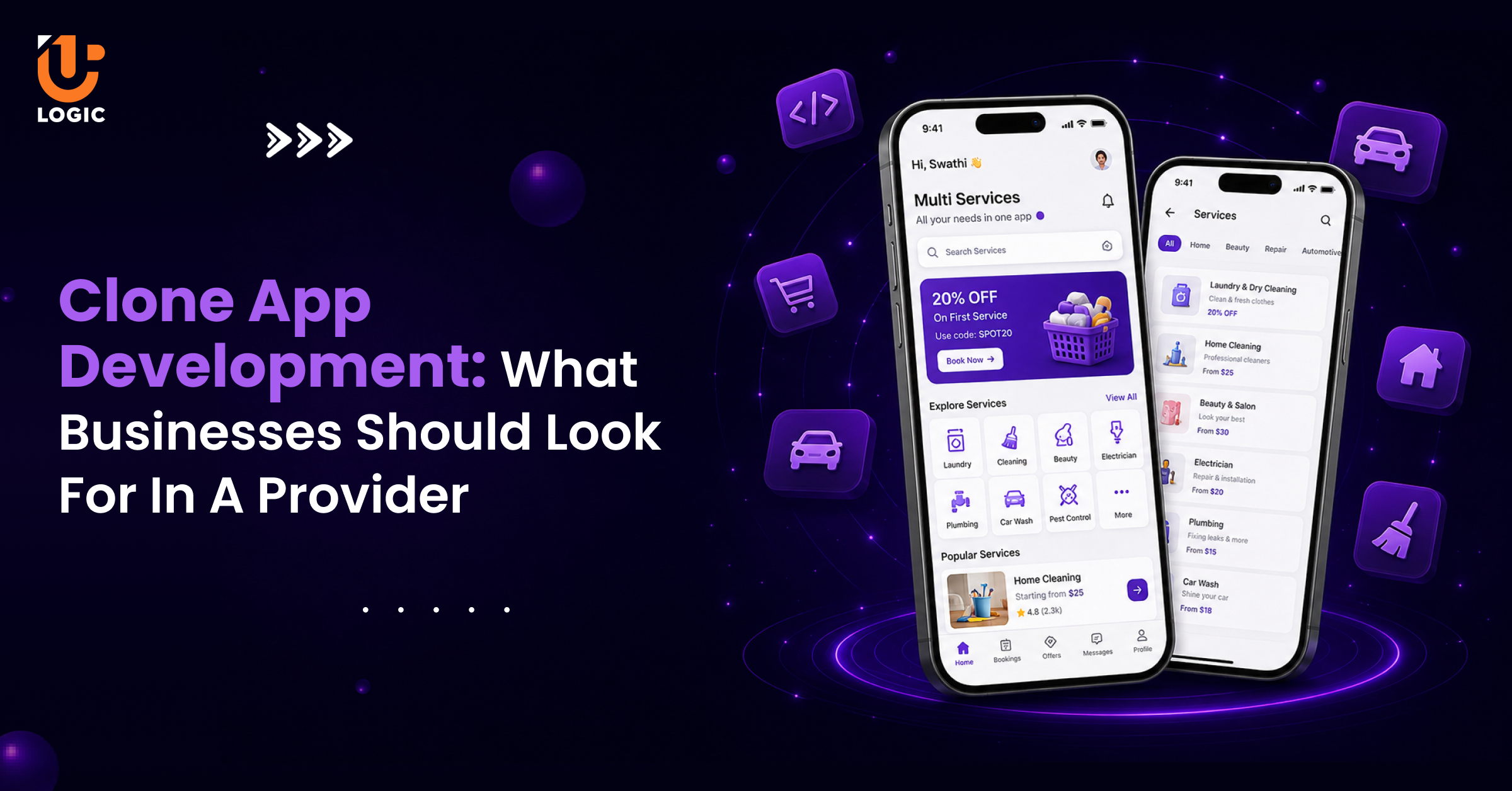
Super apps like Gojek and Grab have proven that consumers prefer a single platform for rides, food, groceries, and payments rather than juggling multiple apps. A multi-service clone app must integrate a unified wallet, modular service architecture, cross-service promotions, and a single sign-on experience across verticals. The ecosystem needs to let businesses launch with one core service and progressively unlock others without rebuilding the platform.
Real Estate Clone Apps
Platforms like Zillow and Realtor.com have transformed how buyers, sellers, and agents connect by digitizing property discovery. The app must integrate advanced property search filters, virtual tours, mortgage calculators, agent-client messaging, and map-based listings. The clone app helps proptech startups reduce the friction in property discovery and closing, while enterprises can monetize through featured listings, lead generation, and premium agent subscriptions.
Rental Clone Apps
Apps like Airbnb and Turo have shown that the rental economy extends well beyond real estate into vehicles, equipment, and even short-term stays. The app must integrate availability calendars, dynamic pricing engines, secure identity verification, and dispute resolution workflows. The ecosystem needs to build trust between owners and renters through reviews, insurance add-ons, and verified profiles. The clone app helps startups unlock underutilized assets as a revenue stream and lets enterprises expand into adjacent rental categories once the core marketplace gains traction.
Healthcare Clone Apps
Telehealth platforms like Practo and Teladoc have made healthcare access more convenient by bringing consultations, prescriptions, and diagnostics online. The app must integrate video consultations, e-prescriptions, appointment scheduling, EHR (electronic health record) integration, and secure payment processing compliant with health data regulations like HIPAA. The clone app helps startups enter the growing digital health market with lower development risk, while enterprises can extend into diagnostics, insurance, and home healthcare services.
What Should Businesses Look for in a Clone App Development Provider
The critical task is to find the right clone app development provider as it impacts the capabilities of the clone app to level up your business. The clone app development company delivers solutions that directly impact your workflows, revenue, data security, and customer relationships. Choosing a reliable provider like Uplogic releases you from having to worry about the outcomes of your apps. You can go through our tips to find the relevant provider:
Assess Their Portfolio & Domain Expertise
Real insights are visible from the company’s portfolios which depict similar projects for clients across regions. Don’t hesitate asking for product demos to get an idea on how the app will work for your target audience. Seeing the projects, you can measure their real experience in clone app development. The factors you should consider are feature complexity, live app store links, performance outcomes, and the industry-relevant expertise.
Confirm That You Get White Label Customization
Instead of seeking ready-made templates, the right approach is to ask for branding customization and functionalities. Ensure you have 100% ownership of the clone app’s source code, giving you the freedom to white-label, upgrade, and maintain complete control over the app’s security. Besides the simple changes, businesses should look into whether they can add custom features to the white label apps. Privacy compliance is an essential consideration in clone app development.
Review Their Technology Foundation
The technology base of the clone apps is paramount to test speed, security, and scalability. Evaluate the development teams on their cross platform frameworks such as Flutter and Reach Native that confirms that the app works across Android and iOS platforms. For the backend and API, there should be technologies like Node.js with PostgreSQL or MongoDB and third-party APIs like Google Maps and regional payment gateways.
Check Their Client Reviews and Feedback
Similar to portfolios, several review platforms reveal the actual experience of developing clone apps with a provider. Clutch, GoodFirms, and The Manifest are the websites where entrepreneurs leave remarks about the providers they have collaborated with for their projects. You’ll learn more about their communication style, how they stick to their project deadlines, post launch support, and delivery reliability. Check for an overall experience rather than a single positive or negative review.
Verify Their Security & Compliance Protocols
When you develop apps that handle payments and user data, you can’t be negligent about security. The security layers of the clone apps matter more to prevent legal penalties and losing customers. How the app processes sensitive user data give you away on their data protection, security testing, compliance audits, and privacy. The provider should detail their security frameworks that apply to the target market and offer better user retention.
Evaluate Their Support & Partnership
The relationship with your business partner extends beyond launch. Businesses have to establish a strong partnership with their provider through clear communication and transparent approach to assure of continuous updates, feature upgrades, and performance monitoring. Long term technical support implies a successful user experience and app scalability as your user base grows.
Common Challenges of Clone App Development for Entrepreneurs
Clone apps offer a faster route to market, but entrepreneurs can underestimate the complexities of building and scaling them. Here are the common challenges to watch out for:
- Replicating features without adapting them to local market needs can lead to poor adoption.
- Using technologies that cannot scale with growing users, real-time tracking, payments, and geolocation can create performance issues.
- Managing multiple payment methods while meeting regional security and compliance requirements can be challenging.
- Finding the right balance between ready-made features and unique customizations is essential for a faster launch.
- Managing customers, service providers, and administrators with synchronized, role-specific dashboards can be technically demanding.
- Handling sudden traffic spikes and growing user demand requires infrastructure that can scale without downtime.
- Ongoing bug fixes, security patches, OS updates, and feature enhancements are essential to keep the app competitive.
Why Turn to Uplogic to Build Your Clone App?
Uplogic combines deep technical expertise with business-first thinking to help entrepreneurs turn clone app ideas into scalable, revenue-generating platforms. Our proven clone app frameworks speed up development while offering full customization to match your brand, market, and business goals. From UI/UX design and backend development to payment integration, compliance, and deployment, we manage the complete app lifecycle.
Our scalable architecture, transparent pricing, and realistic timelines help businesses launch confidently and grow without unnecessary rebuilds. With dedicated post-launch support, maintenance, updates, and enhancements, Uplogic acts as a long-term technology partner focused on your app’s success.
FAQ
No, as long as the app doesn’t copy proprietary code, trademarks, or branding from the original platform. Clone apps replicate business models and core functionalities, not intellectual property, so they are legal when built from scratch with original code.
Most clone apps are built for iOS, Android, and web, along with an admin dashboard. Depending on your business needs, you can choose to launch on one or all platforms.
We use cloud-based, modular architecture (such as microservices) that allows individual components to scale independently, ensuring the app performs reliably even during high-traffic periods