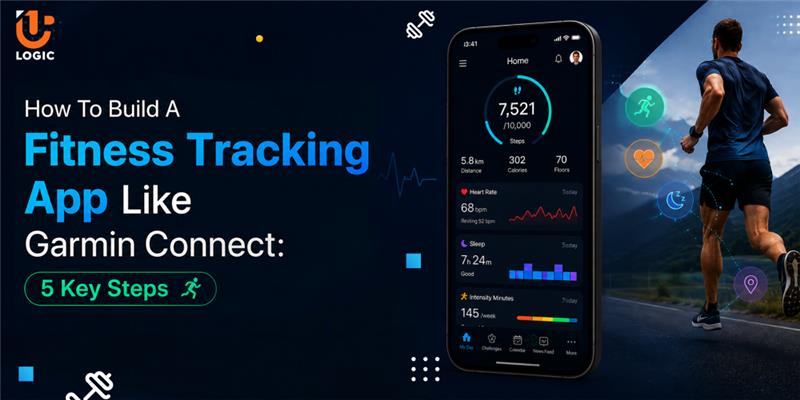
In the age of AI, people are becoming more conscious of their health and turning to wearables to get real-time wellness insights. Garmin Connect has identified its path to success and now boasts nearly 45 million users on its fitness app, supported by impressive growth metrics. The massive demand for fitness apps grew from rising priorities for preventive care, vital tracking, and fitness goals. Garmin Connect’s success has sparked a wave of interest from gym owners, nutritionists, and corporate wellness startups eager to build a fitness app like Garmin Connect.
While the process may sound simple, providers should develop tools that offer comprehensive health management. More than trackers, the technology should function as a training partner through personalized workout regimens. Every step of the development journey is made clear in our easy-to-follow guide.
Brief Overview Of The Garmin Connect App
Garmin Connect app is a mobile and web platform that connects with Garmin smartwatches and fitness trackers to help users track, analyze, and share health data. Users are enthusiastic about the app, which helps them stay in shape. The cloud-based platform earned its reputation through advanced metrics such as heart rate, sleep, intense workouts, and recovery time. People can configure their Garmin watch settings, maps, and device widgets directly in the app.
Top 5 reasons for business owners to develop an app like Garmin Connect:
- The global fitness app market is expanding in revenue growth. Projections indicate that the fitness app market size could reach USD 33.6 billion by 2033.
- Modern customers expect a fitness app that delivers them personalized wellness experiences. Using the app, they intend to achieve fitness goals and improve endurance.
- As a central health data hub, the fitness app fuses multi-sport metrics, biometrics, and sleep tracking to offer better fitness results and boost customer retention.
- Wearable connectivity is a compelling characteristic of the latest fitness app, enabling seamless syncing with smartwatches, IoT health devices, and more.
- The app creates new monetization opportunities through premium subscription upgrades, personalized training plans, and B2B corporate wellness integrations.
Who Needs to Develop A Fitness App Like Garmin Connect
Fitness app development has multiple use cases across the healthcare and wellness sector. Based on their specific needs, the app provider customizes the user interfaces, features, and essential aspects. The project requires a specialized team that comprises a project manager, mobile developers, backend and database engineers, app integration specialists, UI/ UX designers, and QA testers. All of these specialists are found in a trusted app development company like Uplogic.
Hardware & Wearable Brands
Hardware and wearable brands look for tools to lock their customers into their product ecosystem. When they build a fitness app, they can collect sufficient data from the app and offer insights to make recurring revenue by means of paid subscriptions.
Wellness & Health Startups
Owning a fitness app like Garmin Connect aids wellness and health startups in tapping into the high-growth market demand for preventative care. They can engage their customers through community challenges, push notifications, and streaks.
Gym Chains & Studio Owners
Gym chains and studio owners can leverage a dedicated app for fitness to transform into a 24/7 digital fitness partner. They can persuade their members to reserve slots and swap timings for their training sessions using the app’s fitness tracking metrics.
Athlete Coaching Communities
A mobile ecosystem empowers athlete coaching networks to motivate members through leaderboards, group challenges, and activity sharing. They retain ownership of their audience data, connect with broader target groups, and sell digital programs to a vast user base.
Corporate Wellness Providers
Corporate wellness providers use fitness apps to bypass physical office boundaries and reach distributed teams globally. These digital platforms offer an always-accessible tool that tracks real-time health metrics and measures healthcare trends.
Every Garmin Connect-Style Fitness App Needs Essential Features
Features decide how your users interact with the app and impact brand recognition. In users’ wellness journey, a feature-rich fitness app like Garmin Connect creates a lasting impression on existing users and drives more new users.
Profile Management
Users who want to stay active and feel their best register on the fitness app with their social media credentials or their email and phone number. The app gathers details on their fitness level and goals, helping users manage their social account.
Wearable Syncing
The app supports integration with wearable devices to ensure seamless sync of real-time health and fitness data. Thus, it offers users smooth interoperability between devices and platforms for a connected fitness experience.
Activity Tracking
Users can track their fitness activities such as walking, cycling, strength training, and meditation. They can check their progress, achievement badges, and observe their performance occasionally from the fitness app.
Health Monitoring
Every well metric like heart rate, blood oxygen, stress levels, and sleep habits is tracked in the mobile fitness app. Users receive alerts on their smartphones when these levels rise any alarms to help users proactively manage health.
Personalized Plans
Build a fitness app like Garmin Connect that analyzes users’ historical activity data, health metrics, and goals to offer personalized workout plans. The guidance helps maintain a strong user relationship and increase retention.
Push Notifications
Users receive reminders of their workouts, sleep, inactivity, and achievements through smart notifications. Through device permissions, they can manage alerts and milestone celebrations on the fitness app like Garmin Connect.
Nutrition Tracking
Users log their meals every time on the fitness app to monitor calorie intake and track their daily nutrition. With this feature, they can modify their meals to enter a healthier lifestyle and improve their wellness journey.
Social Features
Wellness brands can create a social community through this app that draws in users with challenges, leaderboards, and rewards. Overall, users are likely to be more engaged with the fitness platform and increasingly involved in its activities.
GPS Tracking
The fitness app enables users to map their outdoor route with real-time navigation. It calculates the total distance and how fast they move per kilometer in real time. Users can save the outdoor tracks to check their progress over weeks.
Advanced Analytics
Collecting workout and biometric data, the analytics feature offers visual performance trends, personalized health insights, and training suggestions. The actionable charts help users adapt to future workouts and goals dynamically.
How to Build a Fitness Tracking App Like Garmin Connect
Developing a fitness tracking app like Garmin Connect requires technical expertise, an agile development process, robust technologies, and AI systems. The right development partner simplifies the overall fitness app development, provides updates at every milestone, and delivers a custom fitness app that reflects your core ideas.
Analyze Market & Strategize Plans
Before a single line of code is written, successful fitness app owners study the competitive landscape. This means benchmarking Garmin Connect against other players like Strava, Fitbit, and Apple Health to spot gaps you can fill. Look closely at underserved niches such as recovery-focused athletes, corporate wellness teams, or budget-conscious gym-goers and shape your value proposition around them.
A clear market strategy at this stage prevents costly pivots later and gives your development partner a solid brief to design against.
Define Fitness App Requirements & Goals
Once the market opportunity is clear, translate it into concrete product requirements. Decide which platforms you’ll launch on (iOS, Android, or both), which wearables you need to integrate with, and which core features are non-negotiable for your MVP versus your future roadmap. Setting measurable goals such as target user acquisition numbers, retention rates, or subscription conversion percentages helps your team track success after launch instead of guessing at it.
Focusing on a niche that can bring you greater success contributes to better profits. For instance, you can target desk workers, market to solve lower back pain relief, and offer a specialized workout plan.
Choose A Fitness App Development Partner
Your development partner determines the quality, speed, and scalability of your app. Look for a company with proven experience in wearable integrations, HealthKit and Google Fit APIs, and HIPAA/GDPR-compliant health data handling. Review their portfolio for similar fitness or IoT projects, ask about their QA process, and confirm they offer post-launch support.
A partner like Uplogic brings cross-functional teams from UI/UX designers to backend engineers under one roof, reducing coordination overhead for you.
Map The User Flow & Develop App
With requirements locked in, the team designs wireframes and user journeys that make onboarding, syncing a wearable, and logging the first workout effortless. Development typically proceeds in agile sprints: backend infrastructure and APIs are built alongside the mobile front end, while wearable SDKs are integrated and tested in parallel.
Frequent milestone demos let you course-correct early rather than after launch.
Ensure Security & Compliance
Fitness apps handle sensitive personal health data, so security can’t be an afterthought. This step covers end-to-end encryption, secure authentication (including biometric login options), and compliance with regulations like HIPAA, GDPR, or India’s DPDP Act depending on your target markets.
Regular penetration testing and secure cloud infrastructure protect both your users and your brand reputation.
Test The App & Launch
Before going live, the app undergoes rigorous functional, performance, and device-compatibility testing, including real-world testing with actual wearables to confirm accurate data sync. Beta testing with a small user group surfaces usability issues early.
Once the app passes QA, it’s submitted to the App Store and Google Play, supported by a launch plan covering ASO (App Store Optimization), PR, and early-user incentives.
Earning Opportunities in a Fitness App Similar to Garmin Connect
A well-built fitness app isn’t just a wellness tool; it’s a revenue engine. Business owners can tap into several monetization models simultaneously:
Freemium & Premium Subscriptions
Offer core tracking features for free while charging for advanced analytics, custom coaching plans, or ad-free experiences.
In-App Purchases
Sell premium workout programs, meal plans, or digital badges and achievements that boost engagement.
B2B Corporate Wellness Licensing
Package the app as a white-label or licensed solution for corporate wellness programs, charging per employee seat.
Wearable & Hardware Partnerships
Partner with wearable manufacturers for co-branded integrations or bundled hardware-software offerings.
Advertising & Sponsorships
Fitness brands, supplement companies, and sportswear retailers often pay for targeted placements within a highly engaged health-conscious user base.
Affiliate Marketing
Recommend fitness gear, nutrition products, or third-party services and earn commission on conversions.
Tips to Create A Fitness Tracking App That Transforms Wellness Experiences
Creating a successful fitness tracking app requires a strong focus on user experience, accurate data, and long-term engagement. Build a scalable, seamless experience that keeps users motivated while continuously adapting to their needs. We offer helpful tips for fitness tracking app development to create successful paths.
- Make wearable pairing and goal-setting quick, intuitive, and frictionless.
- Deliver reliable metrics through accurate sensors, calibration, and data validation.
- Clearly communicate how health and fitness data is collected, stored, and used.
- Use flexible infrastructure that can support a growing user and device base.
- Provide a seamless experience across smartphones, smartwatches, and web platforms.
Rely On Uplogic to Deliver Seamless Wearable Experiences
Building a fitness app that rivals Garmin Connect demands more than good intentions; it requires a team that understands wearable ecosystems, health data compliance, and AI-driven personalization at a deep technical level. Uplogic brings together experienced project managers, mobile and backend developers, wearable integration specialists, UI/UX designers, and QA engineers who have delivered fitness and IoT-connected products across multiple markets.
From the first market analysis to post-launch support, Uplogic works as an extension of your team, translating your vision into a secure, scalable, and genuinely engaging fitness platform. Whether you’re a hardware brand looking to extend your ecosystem, a gym chain digitizing member engagement, or a startup entering the wellness space, Uplogic tailors the development journey to your specific goals and budget.
What’s Your Takeaway
The idea of building a fitness tracking app like Garmin Connect is one of the most promising opportunities in today’s health-conscious market. Success comes down to combining the right features wearable syncing, health monitoring, personalized plans, and social engagement with a solid monetization strategy and a development partner who can execute at a high standard.
Start with a clear market strategy, define your niche and goals, prioritize security and compliance, and choose a team experienced in wearable technology. Done right, your app can become more than a tracker; it can become an indispensable daily companion for your users’ wellness journeys.
FAQ
It depends on your target audience. Many fitness app owners start with one platform or a cross-platform framework to validate the concept before expanding.
Start with the most popular devices among your target users, typically Apple Watch, Fitbit, and Garmin devices, then expand integrations based on demand.
Yes, if your app collects health data from users in regulated regions like the US or EU. Compliance protects users and shields your business from legal risk.