Logistics teams are responsible for several different roles, such as order management, inventory, logistics, vehicles, routes, drivers, and delivery. In addition, they must also keep customers informed of their delivery. These tasks can be time-consuming if they’re all done by hand on a spreadsheet. That’s where the logistics software solutions come into play. They provide a single integrated system that assists companies in handling multiple tasks. Moreover, according to Grand View Research, the global logistics market is projected to reach USD 8,496.1 billion by 2033. This growth shows many firms are investing in better logistics systems to manage growing demand and changing operations.
The best logistics software offers increased control over daily work. It enables teams to monitor orders, route planning, deliveries, and view important data. Moreover, it minimizes repetitive work, which is the primary drawback of manual data entry. This gives staff more time to focus on work that needs quick action.
Why Businesses Need Logistics Software Solutions
Businesses serving more customers across various locations face a complex logistics process. They work with drivers, carriers, suppliers, and warehouses. Manual work can become hard to manage as the business scales. Staff may need to check emails for updates and call drivers for delivery status. Moreover, here comes the actual challenge: employees use separate sheets to track stocks and orders. Manual processes can take time and lead to mistakes. To address this key challenge, custom logistics software solutions bring key tasks into one place.
How Logistics Software Supports Daily Operations
The logistics teams can view orders, shipments, routes, and delivery status all from one centralized system. This makes daily work easier and helps teams act faster when there is a problem.
here are the key points on how our software supports the logistics operations.
Manage Orders From One Place
The key part in logistics is order management. Every order needs to be processed with several steps, like it should be received, checked, prepared, shipped, and delivered. When these data are placed in different sheets, some mismatch might occur. A connected logistics platform keeps order details in one place.
Teams can check:
- Order status
- Delivery details
- Customer information
- Assigned driver
- Shipping status
- Delivery time
This helps teams find issues early. It also gives customer support staff better information when customers ask about an order.
Plan Better Delivery Routes
Poor route planning can increase fuel use and driver time. It can also lead to late deliveries. Logistics software helps teams optimize and plan better routes. The system can use details such as delivery locations, vehicle capacity, driver availability, and more to provide accurate results. The dispatch team uses this data to assign deliveries more effectively. Planning better routes helps businesses to reduce unnecessary travel.
Track Shipments in Real Time
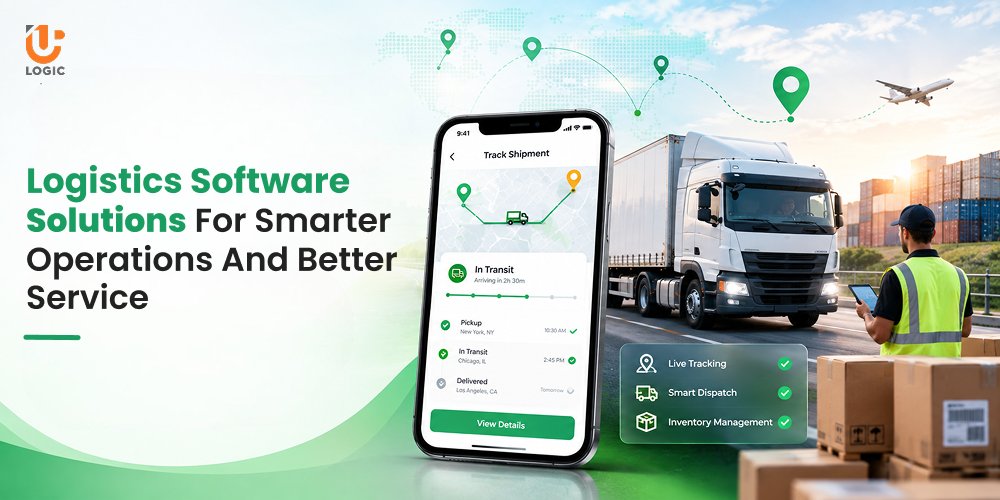
Customers want to track their orders also logistics team needs this same data. Real-time tracking gives teams a live view of shipments and vehicles. The management team can check their delivery progress from a dashboard. They can also spot delays and act accordingly. On the other hand, customers can also check their order status without calling support.
Automate Daily Logistics Tasks
As there are too many repetitive tasks in logistics, like updates, alerts, reports, and delivery messages. Software can help a team to automate many of these tasks. For example, a notification when the order is shipped. It can update the order when a driver completes a delivery. Further, the application also sends an alert message during a shipment delay.
Improve Inventory and Warehouse Work
Logistics and inventory work together. A delivery is done only when the products ready. Logistics software can connect order data with inventory data. Teams can see what stock is available and what has already been assigned to orders. This helps to reduce the common issues such as:
- Wrong items shipped
- Orders waiting for stock
- Unplanned stock transfers
- Delays in order preparation
- Poor stock visibility
Businesses with more than one warehouse can also use software to choose the best location for each order. The choice can depend on stock, distance, delivery time, and shipping rules.
Use Data to Improve Decisions
The logistics management software solutions help to review delivery times, route results, vehicle use, failed deliveries, and shipping activity. This data helps to find poor route planning, heavy traffic, and a lack of drivers. Data helps teams to solve real problems instead of making guesses.
Connect Logistics With Other Business Systems
With the rise in technology, many businesses use software systems such as accounting systems, CRM, ERP, and more. If you are integrating a new logistics software, the solution should work with the existing software tools. For example, a new order from an e-commerce store can be moved to a logistics platform. Once the order is delivered, the delivery status can be moved back to the store. This reduces manual data entry and work with the same information throughout the team.
Add AI to Logistics Operations
To improve your logistics operations, AI can be integrated. AI analyzes a large volume of data and detects patterns that might be difficult to examine manually. AI can assist businesses in providing forecast delivery, tracking delays, and supporting demand forecasting and routing. For instance, an AI system can analyze historical delivery records and identify potential delays in orders. The manager can then take action before the issue impacts the customer.
Improve the Customer Experience
Proper logistics operations can improve customer satisfaction. A late order or poor delivery update can damage trust. Logistics software helps businesses to keep customers informed. Automated messages can share order updates at key points. Customers can receive updates when:
- An order is confirmed
- An order is packed
- A shipment leaves the warehouse
- A delivery is on the way
- An order is delivered
Planning a custom logistics software project? Share your business requirements with our team and discuss the right development approach for your operations.
Factors to Consider While Choosing a Logistics Management Software
The need for a logistics software solution changes with respect to industry. To make successful logistics software, first you have to analyze the challenges and add features to address these issues.
Most companies look for:
- Order management
- Shipment tracking
- Route planning
- Driver management
- Vehicle management
- Inventory tools
- Automated alerts
- Reports and analytics
- System integrations
- Security
- Scalability
Wrap Up
Logistics software solutions bring these tasks together. They help teams manage orders, track shipments, plan routes, control inventory, and improve customer updates.
Automation can reduce repetitive work. Real-time tracking can help teams respond to delays. Data can support better decisions. Integrations can connect logistics with other business systems.
For growing businesses, the right logistics software can do more than manage deliveries. If you are looking for the best custom logistics software solution development, Uplogic helps businesses plan and develop custom logistics software around their operational requirements. The development approach can be aligned with existing workflows, business systems, integration needs, and future growth plans. From logistics platforms to transportation management solutions, the focus is on creating software that fits the way a business operates.
Have a logistics software idea in mind? Share your requirements with our team and start planning your project with the right technology partner.
Logistics software solutions are digital platforms that are developed to plan, execute, and manage the goods movement and storage across a supply chain.
The benefits of using logistics software solutions can reduce operational costs, enhance real-time visibility, and improve customer satisfaction.
Real-time data gives businesses up-to-date insights instead of relying on outdated reports. This helps supply chain teams respond faster, reduce reactive decisions, and take a more proactive approach to operations.