Healthcare organizations have a workflow that is constantly in play, round-the-clock. In the medical field, there’s always a flow of medications, drugs, equipment, and vital products. These resources, however, need to be managed across multiple suppliers, warehouses and healthcare facilities. There are a number of challenges involved in this process, also requires careful coordination. When this process is manually monitored, it makes it difficult to maintain accuracy, manage procurement, and keep track of deliveries.
The current and old supply chain approach is not compatible with the growing business in healthcare operations. As a result, the enterprise must have a digital solution that will make complex processes easier, provide better visibility of data, and enable teams to make informed decisions. That’s where healthcare supply chain management software development becomes crucial.
Software is designed to link key supply chain functions, automate repetitive tasks, and enhance operational control. If you are running a healthcare business and want the right software to help you monitor the entire supply chain operations across the organization. Then this blog is for you. Let’s explore its essential features, benefits, and development process.
What is Healthcare Supply Chain Management Software?
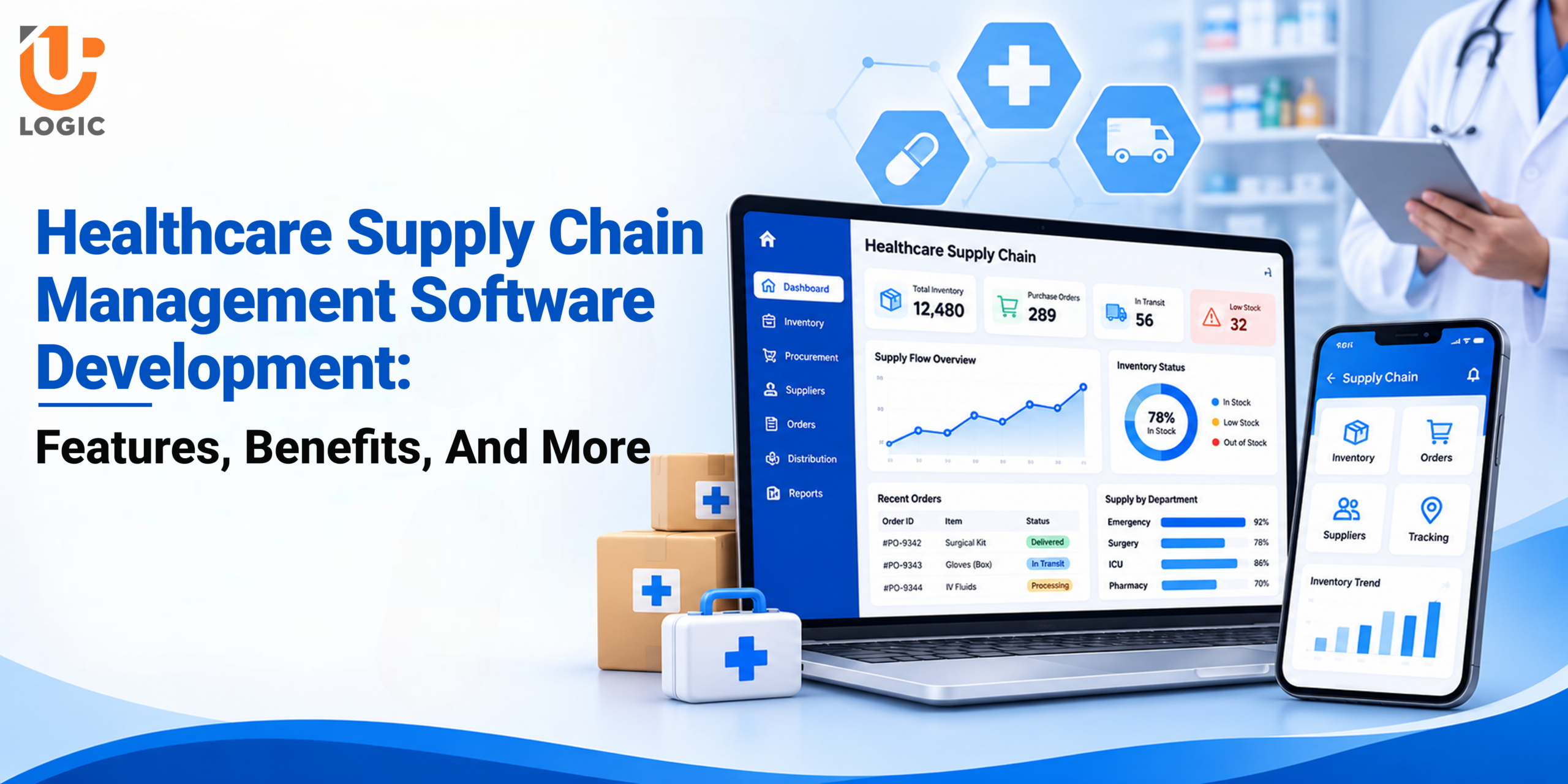
Healthcare supply chain management software is a computer-based solution. It can assist healthcare institutions in the procurement, storage, tracking, and distribution of medical products and equipment. It integrates various functions, including supplier management, procurement, inventory management, warehouse operations, and order processing, into a single system.
The software, for instance, can send an alert to the team when the minimum level of the hospital inventory is reached, alerting them to reorder. This assists companies in keeping up a sufficient inventory without having to rely on manual oversight. These are aspects that can help healthcare organizations have more accurate inventory, better supplier coordination, less paperwork, and more control over the supply chain.
Why Healthcare Organizations Need Supply Chain Management Software?
Healthcare supply chains involve multiple stakeholders. They are healthcare professionals, procurement teams, suppliers, distributors, and manufacturers. Manual operations for monitoring their processes bring operational risk and challenges.
Here are some common problems:
- Unreliability in keeping stock records makes it hard to determine actual supply needs.
- Manual ordering approvals and disjointed systems delay reordering.
- It’s difficult for organizations to keep track of the products from one facility to another and to track products in their warehouses.
- When expiry is not monitored properly, this results in waste.
- Relying on a small number of suppliers raises the risk of shortages.
- Product records and traceability can be challenging to keep at several sites.
Essential Features of Healthcare Supply Chain Management Software
When planning healthcare supply chain management software development, integrating the following features supports the organization’s operational requirements.
1. Procurement and Supplier Management
Organizations can manage suppliers, purchase requests, quotes, and purchase orders from a single central location. Procurement teams should be able to use the software to compare supplier prices, check the supplier’s delivery history, manage their contracts, and monitor the approval of their purchases. This is to enhance the buying process and to ensure consistent supply chain management.
2. Real-Time Inventory Management
Track medical supplies, pharmaceuticals, equipment, and consumables in various storage areas. Stock updates, inventory movement tracking, low stock alerts, and automated stock replenishment help ensure optimal inventory levels. The scanning of barcodes and RFID can further increase the accuracy of the inventory.
3. AI-Powered Demand Forecasting
AI and predictive analytics can assist organizations in forecasting future supply needs based on historical consumption data, purchasing trends, and seasonal variations. This information enables procurement personnel to make more informed purchasing decisions, predict potential stockouts, and prevent overstocking.
4. Warehouse Management
Healthcare enterprises can manage warehouse activities like receiving, storage allocation, picking, packing, and dispatching. Automated stock updates and location-based inventory tracking help teams to organize products and improve order fulfillment. Storage monitoring capabilities are also useful for temperature-sensitive medical products.
5. Order and Shipment Management
Schedule and track purchase orders, supplier confirmations, dispatching, and deliveries all in one system. Shipment tracking assists teams in tracking the movement of the products, analyzing delays in product delivery, and getting alerts when unexpected shifts happen. Another benefit of IoT integration is in the field of environmental monitoring while transporting goods.
6. Batch, Expiry, and Recall Management
Maintain product information, including batch and lot numbers, manufacturing dates, and expiration dates. Automated alerts help identify products approaching their expiry dates, while batch-level tracking makes it easier to locate affected products during recalls.
7. Reporting and Analytics
Generate reports covering inventory availability, procurement spending, supplier performance, warehouse operations, and shipment status. Interactive dashboards help administrators evaluate performance, identify operational gaps, and make better business decisions.
Key Benefits of Healthcare Supply Chain Management Software
Implementing a centralized supply chain solution can improve several aspects of healthcare business operations. It can automate the activities, provide a clear view of the available stocks, assist in better utilization of the warehouse, and give valuable insights on trends, availability, and performance. Here are some key benefits of healthcare supply chain management software:
- Streamlined Business Operations
- Better Inventory Control
- Reduced Operational Expenses
- Improved Supply Chain Visibility
- Better Decision-Making
Healthcare Supply Chain Software Development Process
It is important to take a structured approach in creating a healthcare supply chain platform to ensure that the new platform can help your business processes.
Step 1: Requirement Analysis
Define your challenges, business goals, user roles, and current supply chain processes. Collaborate with procurement, warehouse, admin, and other parties to collect the needs.
Step 2: Planning and Architecture
Outline software requirements, software architecture, software technology stack, software integration, and security considerations. Create a development roadmap in line with your business targets.
Step 3: UI/UX Design and Prototyping
Create a user-friendly interface for various user roles. Develop prototypes to evaluate navigation, workflows, and essential functionalities before starting full-scale development.
Step 4: Software Development
Create necessary modules like procurement, supplier management, inventory management, order processing, reporting, etc. Depending on project needs, further features like AI forecasting and IoT monitoring can be added.
Step 5: Integration and Testing
Integrate the platform into current ERP, EHR, warehouse, accounting, and logistics solutions. Run functional, integration, performance, and security tests to verify that the software operates correctly.
Step 6: Deployment and Maintenance
Install the solution in the specified environment and train users as needed. Periodic updates, performance surveillance, and maintenance enable the software to meet evolving business needs.
Healthcare Supply Chain Software Compliance Requirements
Compliance is an important consideration when developing software for healthcare operations. Depending on your business model, geographical coverage, and the type of information managed, your platform may need to support the following standards and regulations:
- HIPAA: Protects applicable electronic protected health information handled by covered entities and business associates in the United States.
- DSCSA: Establishes requirements for identifying and tracing pharmaceutical products across the US drug supply chain.
- FDA UDI: Supports standardized identification and traceability of applicable medical devices.
- EU MDR: Defines regulatory requirements for medical devices marketed in the European Union.
- GDPR: Establishes requirements for processing and protecting personal data within its applicable scope.
Your software should incorporate appropriate access controls, encryption, audit trails, and data management practices to support relevant compliance requirements.
Develop a Smarter Healthcare Supply Chain Solution with Uplogic
Managing a healthcare supply chain efficiently requires connected systems, accurate information, and streamlined workflows. A custom software solution can help organizations overcome operational limitations while supporting their changing business requirements.
At Uplogic, we provide custom software development services to help businesses transform their operational processes through technology. Our development team can help you build healthcare software solutions around your specific workflows, integration requirements, and business objectives.
From planning and UI/UX design to development, integration, and ongoing improvements, we follow a structured approach to deliver scalable business software.
Our development capabilities include:
- Custom supply chain management software development
- Inventory and procurement management solutions
- ERP and third-party application integrations
- AI-powered business automation
- Cloud-based software development
- Ongoing maintenance and technical support
Whether you want to modernize an existing supply chain system or develop a new platform, Uplogic can help you turn your business requirements into a practical software solution.
FAQ
Healthcare supply chain management software helps hospitals, pharmacies, and other healthcare suppliers to manage procurement, inventory, warehousing, and product distribution via a centralized digital system.
Healthcare supply chain management ensures the timely availability of medicines, medical equipment, and essential supplies. It helps reduce stock shortages, waste, control costs, and improve procurement efficiency.
The key features of healthcare supply chain management software include supplier management, real-time inventory tracking, demand forecasting, warehouse management, order processing, shipment tracking, and analytics.