The traditional fuel business is evolving with the changing customer expectations. Fuel station owners and suppliers are exploring digital solutions to deliver fuel beyond station premises. On-demand fuel delivery and mobile EV charging are creating new opportunities for businesses to diversify their service reach, attract new customers, and unlock more revenue streams.
Both on-demand fuel delivery and EV charging are emerging opportunities. The fuel delivery helps customers or businesses to receive fuel at their preferred location. On the other hand, the EV charging station finder shows nearby EV stations to customers. Two services hit the market differently.
In this blog, let’s understand how these services work and what the significant criteria are to consider before entering the digital energy market.
Why Fuel Retailers Are Expanding into Digital Energy Services
As traditional fuel retailing depends only on physical infrastructure, customer visits, and location-based sales, businesses want to expand their customer base without relying on location. Fleet operators need fuel supplies to keep their vehicles running. Meanwhile, construction companies require diesel for their machinery at their project location, and individuals value more convenient fueling options. At the same time, EV owners need accessible charging solutions as electric mobility expands. These requirements create new opportunities for fuel retailers to diversify their operations. Digital energy services can help businesses:
- Attract more customers beyond their location’s appearance.
- Establish commercial relationships with the enterprises and fleet operators.
- Generate additional revenue via delivery and charging services.
- Minimize the dependency on walk in fuel sales.
- Build new partnerships with energy suppliers and mobility businesses.
Rather than replacing conventional fuel stations, digital services provide another way to distribute energy and serve customers.
On-Demand Fuel Delivery: Taking Fuel Beyond Traditional Stations
On-demand fuel delivery enables businesses to supply petrol, diesel and other fuels to customers directly. Instead of a vehicle or equipment required to travel to a fuel station, the suppliers bring the fuel to the requested destination. This business model has apps across several industries. Businesses like logistics companies, construction sites, and agricultural operators need fuel regularly without interrupting their work.
For fuel retailers, this creates amazing opportunities to expand from station-based selling into location-based fuel distribution.
How the fuel delivery workflow operates
- Business owners, individuals, or fleet managers submit the fuel request specifying the type, quantity, and delivery location.
- On the other hand, the fuel supplier receives the request and verifies the availability, requirements, and pricing.
- The business assigns an authorized delivery vehicle and trained personnel.
- The delivery team transports the requested fuel to the specified destination.
- After completing the supply under applicable safety procedures, the delivery is confirmed and the transaction is closed.
This approach is particularly useful for businesses managing multiple vehicles, heavy equipment, generators, and commercial transportation operations.
EV Charging: Bringing Charging Assistance to Electric Vehicles
The rise in electric vehicles is creating different opportunities for energy retailers. Although public charging infrastructure is rising in certain regions, people owning EVs still face situations where a charging station is unavailable, inconveniently located, or difficult to access.
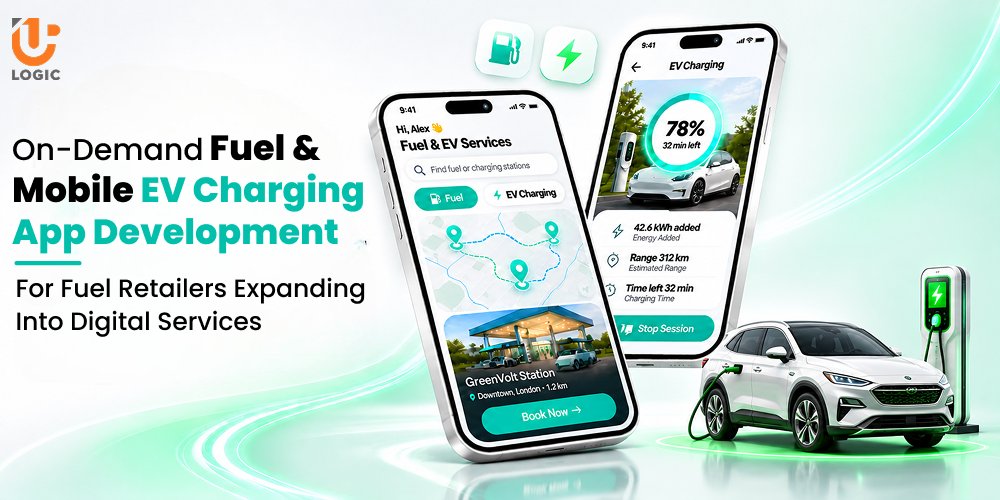
The EV charging app addresses this challenge. The app shows the charging station, availability, and other details. EV owners can use this service to easily find the station and charge their vehicles. This service adds as an additional business vertical either independently or via partnerships with EV charging operators.
How the mobile EV charging workflow operates
- Business owners launch an app, and customers use it to find the nearby EV charging station.
- Customers open the platform and share their current location to find the station.
- The platform identifies the provider station along with details such as availability, charging speed, and other features.
- With these details, customers can reach the location and charge their vehicle.
Business Opportunities for Fuel Retailers
Combining fuel distribution with digital service helps retailers to explore multiple customer segments. However, each service offers different commercial opportunities.
1. Commercial Fleet Partnerships
Fleet operators require recurrent energy supplies to maintain daily transportation activities. Fuel retailers can start fuel delivery arrangements with logistics providers and other related businesses.
2. Construction and Industrial Supply
Agricultural operations, construction sites, and industrial facilities require fuel for their machinery and equipment. Digital fuel delivery services help these businesses establish direct relationships to coordinate with the recurring supply requirements.
3. Residential and Individual Customers
Fuel delivery can serve eligible vehicle owners who prefer refueling at their homes or workplaces. Similarly, mobile EV charging can attract electric vehicle owners who need to find the convenient charging stations.
4. Energy Service Partnerships
Retailers can collaborate with fuel distributors, EV charging providers, fleet management companies, and local service operators. These partnerships can help businesses enter new service categories without independently establishing every part of the operating infrastructure.
Expanding Fuel Retailing into the Digital Energy Market
The future of energy retailing will involve more than traditional fuel stations. On-demand fuel delivery gives retailers an opportunity to distribute fuel directly to customers and commercial locations, while mobile EV charging opens another business avenue within the expanding electric mobility market.
For fuel retailers, these developments offer opportunities to diversify revenue, build stronger business partnerships, and serve customers through additional digital channels.
Investing in on-demand fuel and mobile EV charging app development can help businesses establish the technological foundation for this expansion. Uplogic is the most trusted on-demand app development company. We assist businesses in choosing the right operating model and understanding the requirements of each service; fuel retailers can prepare their businesses for the next stage of digital energy distribution.
FAQ
An on-demand fuel delivery app is a digital platform that allows customers, fleet operators, and businesses to request fuel at their preferred locations.
Fuel retailers can expand their customer base by serving commercial fleets and construction businesses, establish recurring supply contracts, and generate additional revenue via fuel delivery services.
The on-demand fuel delivery and mobile EV charging app development cost depends on the business model, platform requirements, integrations, operational complexity, and target market.