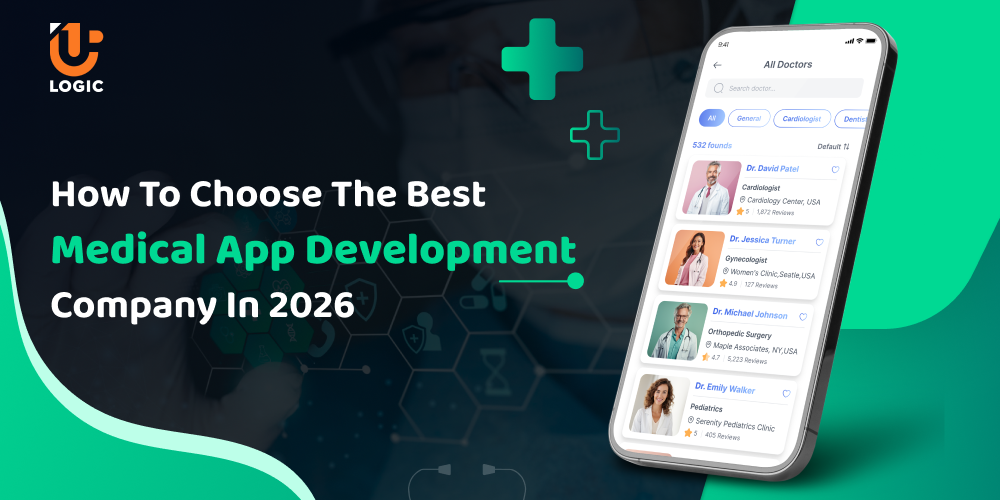
In the digital health landscape, the choice of the medical app development company in 2026 influences how healthcare providers, staff, and clinicians can streamline workflows and improve care coordination. Investing in the right healthcare technology helps make healthcare more accessible and efficient. From prioritizing regulatory compliance to data security, the right partnership to develop a medical app creates a difference.
With multiple providers in the market, identifying the right one has its own challenges. Especially in 2026, when digital transformation takes the lead, there are certain best practices to choose who should build your next-gen medical systems. We help you with the technical decision by stating the factors to look for and mistakes to avoid in finding a suitable fit.
Amazing Benefits of Medical App Development for Modern Healthcare
Modern healthcare thrives using advanced medical apps that encompass remote patient monitoring, EHR access, AI-driven innovation, and health and wellness tracking. They are designed to cater to diverse user needs, covering clinical workflows, remote patient care, and clinical decision support.
Remote Patient Monitoring
Healthcare providers adjust their treatment for medical conditions while tracking patients’ vitals and health data. Patients can benefit from better adherence to a care plan offered by doctors through remote patient monitoring.
Enhanced Care Accessibility
With the telemedicine capabilities, patients can book appointments, track their health status, and consult doctors. Moreover, medical apps give patients access to electronic health records (EHR) and enhance transparency while removing physical barriers.
Streamlined Operations
Developing medical apps helps automate administrative tasks and centralize data. The digital tools feature self-scheduling, secure messaging, digitized billing, and smart record management. Healthcare staff can reduce appointment no-shows using the app.
Data-Driven Decisions
The real-time insights provide advantages, such as personalized patient care, early disease detection, optimized staff scheduling, and evidence-based clinical recommendations. The systems help eliminate guesswork and enhance patient engagement.
Things to Consider When Choosing A Medical App Development Company
Choosing the right partner for medical apps helps adapt to the demands of digital health infrastructure. Before assigning the task, hospitals and clinics should look into these considerations to help tap into the clinical reality.
1. Industry-Relevant Experience Keeps Your Medical App Development on Track
Healthcare providers and clinics should analyze the track record of the app development companies before choosing one to develop medical apps. Understanding the knowledge and experience of experts in the company lets you advance with confidence. Since the standards and a specific set of rules are peculiar to the healthcare sector, it is essential to handle EHR integration in health systems. And that factor has to be noted in choosing a custom medical app development company.
2. Healthcare App Compliance & Security for Trusted Digital Health Solutions
There should be a prompt realization of security in healthcare apps, especially during the discovery stage. Healthcare institutions should establish a strong foundation while discussing role-based access controls, data encryption, compliance-first models, and audit logs. Based on region and segments, adherence to compliance varies, such as HIPAA, FDA, HITECH, and others.
3. Connected Healthcare Systems Require Careful Attention to Interoperability
Integration with wearable devices ensures continuous health data. Developing a connected healthcare system enables interoperability, helping break down silos, reduce administrative burdens, and enhance medical accuracy. The company should be capable of integrating your app with Electronic Medical Records (EMR), Hospital Information Systems (HIS), Laboratory Information Systems (LIS), telemedicine platforms, wearable devices, and third-party healthcare APIs.
4. AI Remains at the Core of Modern Medical App Development
Artificial intelligence has become a fundamental component of modern healthcare applications. From predictive analytics and symptom assessment to medical imaging assistance and virtual health assistants, AI-powered features improve clinical efficiency while enhancing patient experiences. The development team should understand data quality, model accuracy, explainable AI, and regulatory considerations while going for the medication management app development company.
5. System Integrations That Enhance Medical App Performance and Scalability
Healthcare applications rarely function as standalone systems. They must seamlessly integrate with existing hospital infrastructure, third-party platforms, and medical devices to ensure uninterrupted workflows. Well-planned integrations reduce manual data entry and provide healthcare professionals with complete patient information from a centralized platform.
6. Dedicated Support Before and After Launch Ensures Continuity
Medical applications require continuous monitoring, regular updates, and proactive maintenance long after deployment. Healthcare regulations evolve, operating systems receive updates, and cybersecurity threats continue to emerge, making ongoing support essential. A reliable long-term technology partner ensures your application remains secure, compliant, and capable of meeting changing business and healthcare requirements.
7. Medical App Development Pricing Compared to Overall Value Delivered
While development cost is an important consideration, selecting a vendor based solely on the lowest price can lead to higher long-term expenses. Instead, evaluate the overall value the company delivers. A reputable medical app development company provides clear project estimates, transparent pricing models, realistic timelines, and measurable business outcomes.
Mistakes To Avoid In Finding a Medical App Development Partner
Replying to the wrong technology partner can delay projects, increase costs, and create compliance risks. Conducting thorough technical and business evaluations before signing a contract significantly increases the chances of project success. Hospital owners should avoid these common mistakes during the evaluation process:
- Ignoring compliance and security requirements until late in the project.
- Focusing only on development cost instead of long-term value.
- Overlooking integration capabilities with existing healthcare systems.
- Failing to review previous healthcare projects and client testimonials.
- Not defining project scope, milestones, and communication processes.
- Choosing a partner that doesn’t provide post-launch maintenance and technical support.
- Neglecting scalability requirements for future business growth.
Why Choose Uplogic Over Others for High-Value Medical App Development
Building healthcare apps requires more than software development expertise—it demands an understanding of clinical workflows, patient privacy, interoperability, and evolving regulatory standards. Uplogic delivers healthcare technology solutions designed to improve operational efficiency while supporting better patient outcomes.
Our medical app development services include:
- Custom healthcare application development
- Telemedicine platform development
- Electronic Health Record (EHR) integration
- Remote patient monitoring solutions
- AI-powered healthcare applications
By combining modern technologies such as AI, IoT, cloud computing, and secure APIs, our development team creates scalable healthcare solutions tailored to hospitals, clinics, diagnostic centers, healthcare startups, and enterprise healthcare providers.
Final Thoughts
Choosing the best medical app development company in 2026 requires careful evaluation of technical expertise, healthcare industry knowledge, regulatory compliance, security practices, integration capabilities, AI proficiency, and long-term support services.
The right development partner doesn’t simply build an app; they help create a secure, scalable digital healthcare ecosystem that improves patient engagement, streamlines clinical workflows, and supports organizational growth. By prioritizing experience, transparency, innovation, and compliance, healthcare organizations can confidently invest in digital solutions that deliver measurable value for years to come.
FAQ
Depending on your target market, medical applications may need to comply with HIPAA, GDPR, HITECH, FDA guidance, MDR, or other regional healthcare regulations. Your development partner should help determine the applicable requirements.
The cost varies based on application complexity, required integrations, AI features, security requirements, supported platforms, and compliance needs. Simple applications may cost significantly less than enterprise-grade healthcare platforms with advanced functionality.
Interoperability enables healthcare systems to securely exchange patient information across hospitals, clinics, laboratories, pharmacies, and wearable devices. This improves care coordination, reduces duplicate data entry, and supports better clinical decision-making.